It’s a common question:
does anti-fatigue matting actually reduce fatigue, or is it just marketing?
The short answer is — yes, it works, when specified correctly.
The Science Behind It
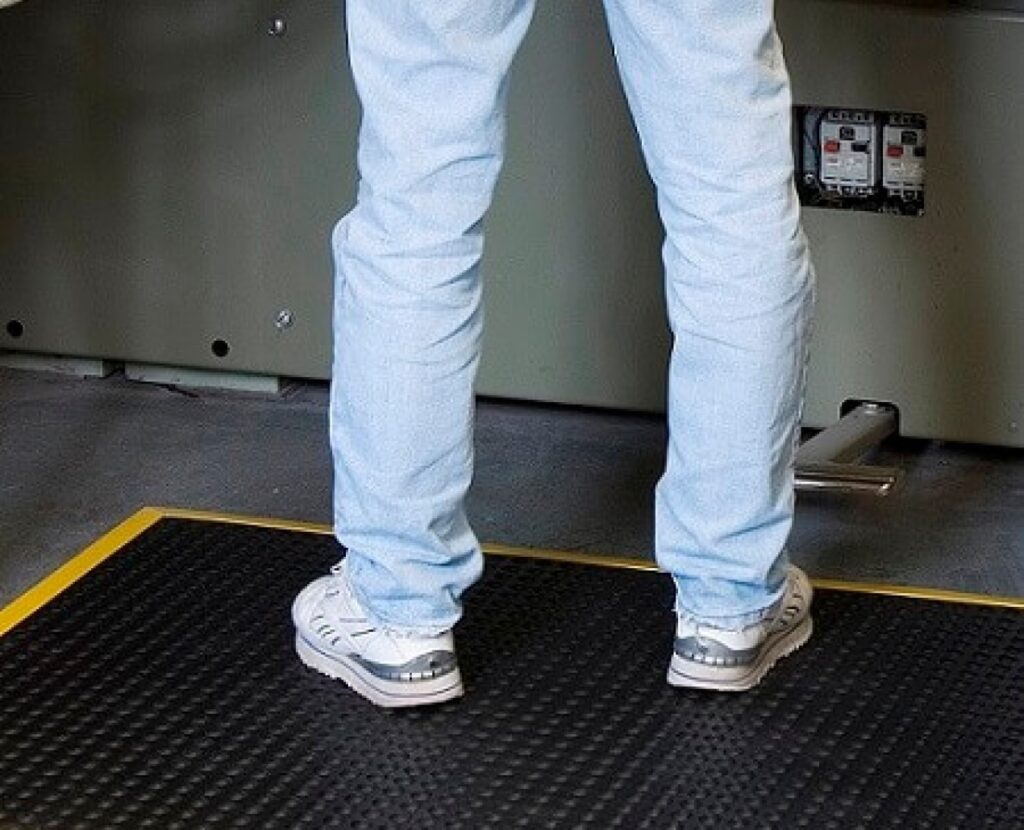
When standing on a hard surface like concrete, muscles remain static. This restricts blood flow and increases pressure on joints.
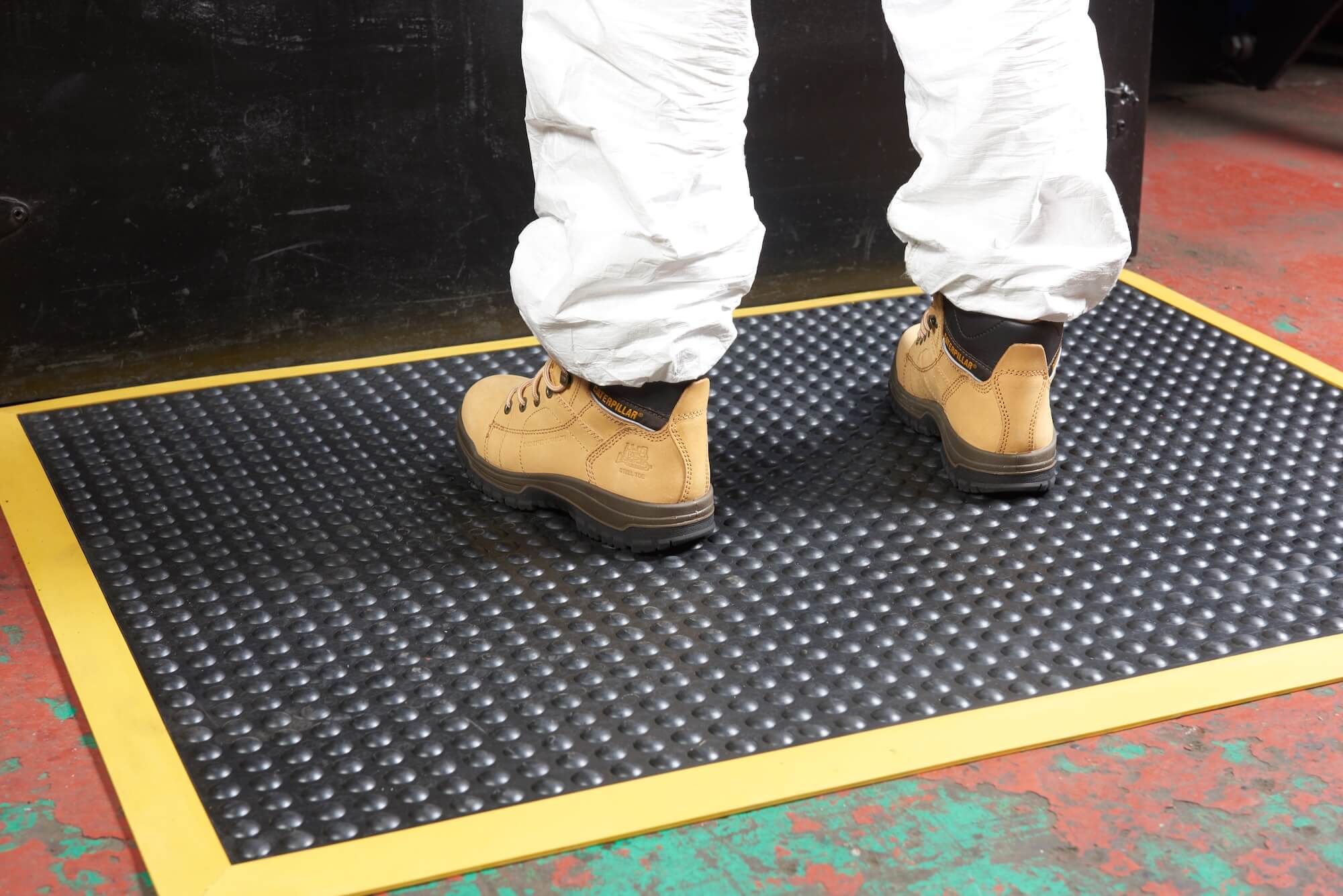
Anti-fatigue mats work by:
- Encouraging micro-movements in the calf muscles without you even realising it.
- Improving circulation
- Reducing pressure on the lower back, knees, and feet
These small movements help prevent stiffness and muscular strain.
Measurable Benefits
Businesses that install quality anti-fatigue matting often report:
- Reduced complaints of leg and back pain
- Improved productivity
- Fewer sick days related to musculoskeletal issues
- Increased employee morale
In environments where employees stand for 4+ hours per shift, the impact can be significant. If you are unsure, we are happy to provide a trial mat so you can be sure of your return on investment.
When It Doesn’t Work
Anti-fatigue matting may fail if:
- The mat is too thin or too soft
- It’s used in the wrong environment
- It becomes compressed over time
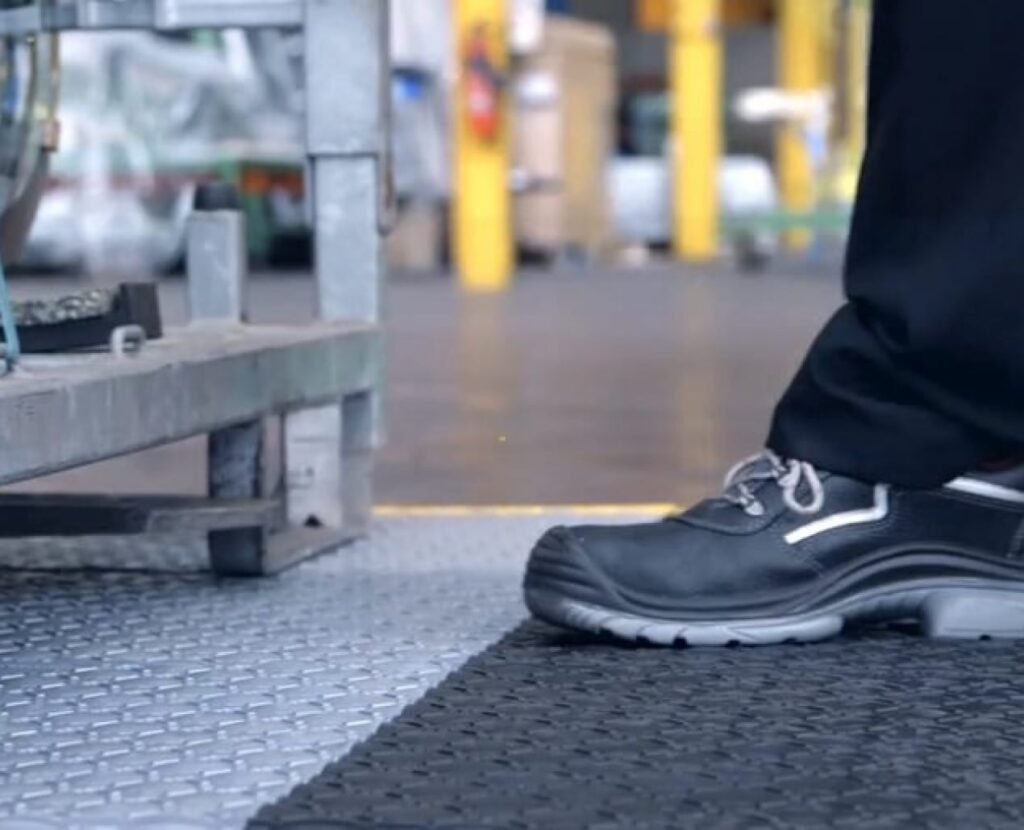
- It creates instability around machinery
Specification matters.
A Cost vs Risk Perspective
Compared to the cost of absenteeism or workplace injury claims, anti-fatigue matting is a relatively small investment with potentially substantial returns.
When used correctly, it’s not just comfort — it’s preventative health and safety.
Speak to UK Industrial Safety Specialists
If you need Industrial Anti-Fatigue Mats for Factories in the UK or a full Industrial Safety Solutions for Manufacturing Facilities package, Strata Sales provides compliant, heavy-duty floor safety systems trusted across UK manufacturing and warehouse environments.